Feature

Draft Order Algorithm

A mathematically fair turn order — even when partners take different numbers of picks. Enter each person's share, click Generate, and every turn lands where it should.

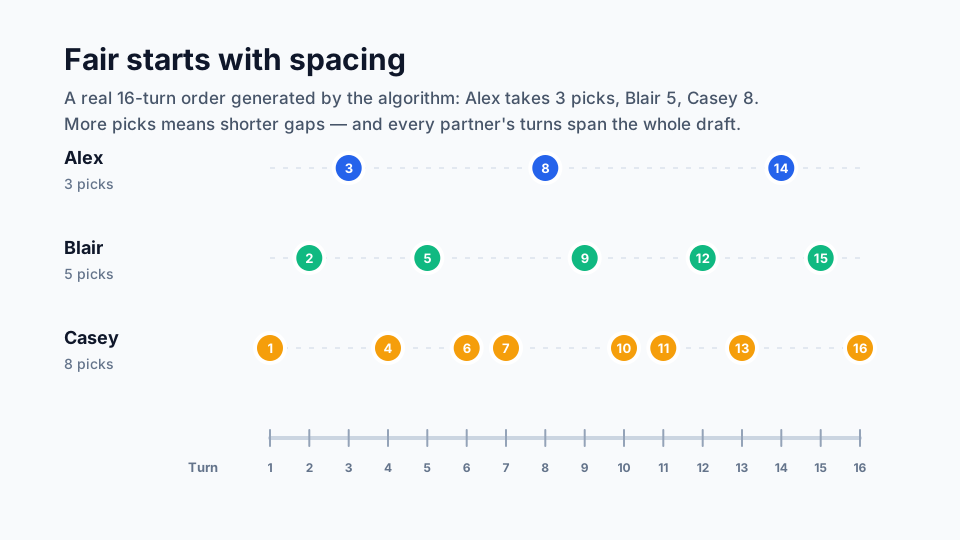
A real 16-turn draft order where Alex's 3 picks, Blair's 5 picks, and Casey's 8 picks are each spread evenly across the whole draft

The problem

Equal turns aren't fair when shares aren't equal.

Season-ticket partners where one person takes 25 games and another takes 5. A sales team splitting leads by seniority. Co-owners dividing weeks at a cabin. Most groups don't split things evenly — but most draft orders assume they do.

The old way

Force everyone into the same rhythm.

Traditional draft orders give every partner the same number of turns in the same pattern. With unequal shares, that means awkward workarounds — extra rounds, skipped turns, or somebody quietly getting a worse deal.

The OnlineDraft way

Shape the order to each partner's share.

The algorithm spreads every partner's turns evenly across the whole draft. A partner with half the picks selects roughly every other turn; a partner with a few picks still gets them spaced fairly from start to finish.

Beyond the snake

Snake-draft fairness, without the equal-shares rule.

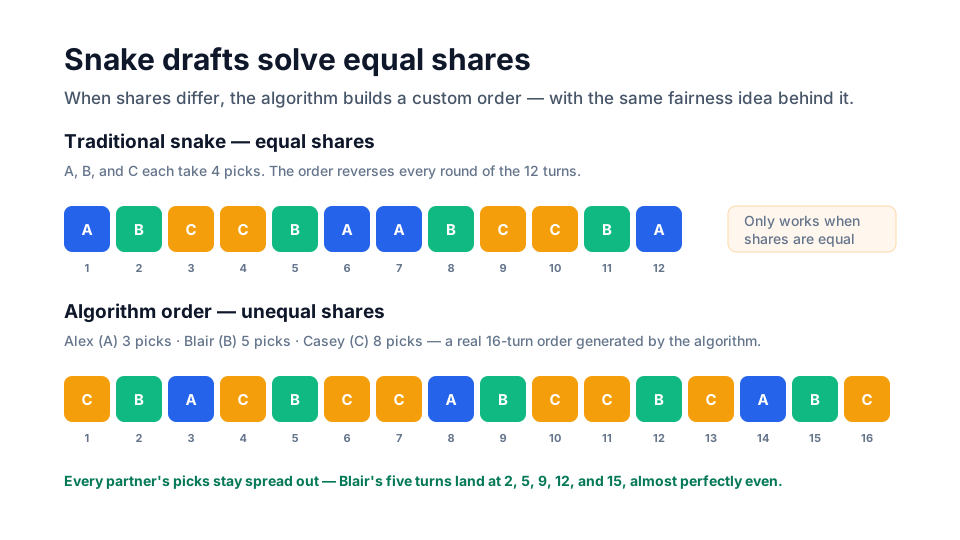
Snake drafts are the classic answer to fairness: the order reverses each round, so an early pick in one round becomes a late pick in the next. That works beautifully — but only when every partner takes the same number of picks. The algorithm keeps the same idea and extends it to any mix of shares. When shares happen to be equal, it produces a classic snake draft with a randomized start.

A traditional 12-turn snake draft for three equal partners compared with a real 16-turn algorithm-generated order for partners with 3, 5, and 8 picks, with every turn numbered

Balanced over time

One early pick doesn't break fairness.

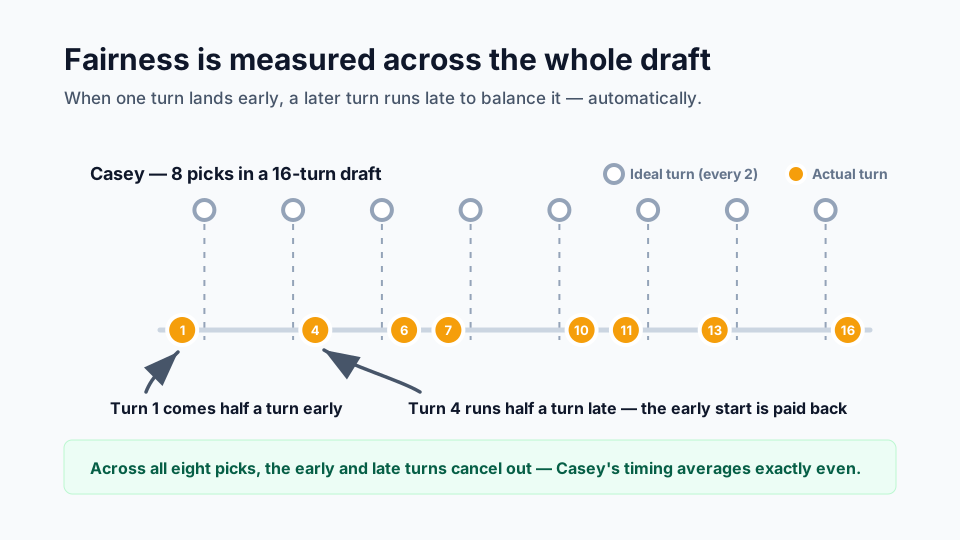
Turns are whole numbers, so nobody can pick at exactly their ideal moment — someone has to go first. The algorithm judges each partner's entire schedule instead of any single pick: when a turn lands a little early, a later turn runs a little late to pay it back.

Casey's 8 actual turns plotted against ideal evenly spaced turns: turn 1 comes half a turn early, turn 4 runs half a turn late, and across all eight picks the differences cancel out

How it works

Four steps to a fair order.

No math degree required — this is what happens in the seconds after you click Generate.

01

Map the ideal

Each partner's pick count sets their ideal schedule: turns spaced evenly across the whole draft, with more picks meaning shorter gaps.

02

Score the options

Every candidate order gets a fairness score measuring how far each partner's turns drift from that ideal schedule.

03

Look ahead

The algorithm assigns turns one at a time, searching several picks ahead so partners' ideal turns don't collide or pile up.

04

Keep the fairest

It builds the order several times and keeps the best score — an order that approaches the mathematical ideal for your exact mix of shares.

Built into every group. Open your Draft Order page, enter each partner's picks, and generate a fair order in one click.

Give every partner a fair turn.

Create your group for free, set each partner's share, and let the algorithm build the order.